Drangue
Drangùe / Dragùa
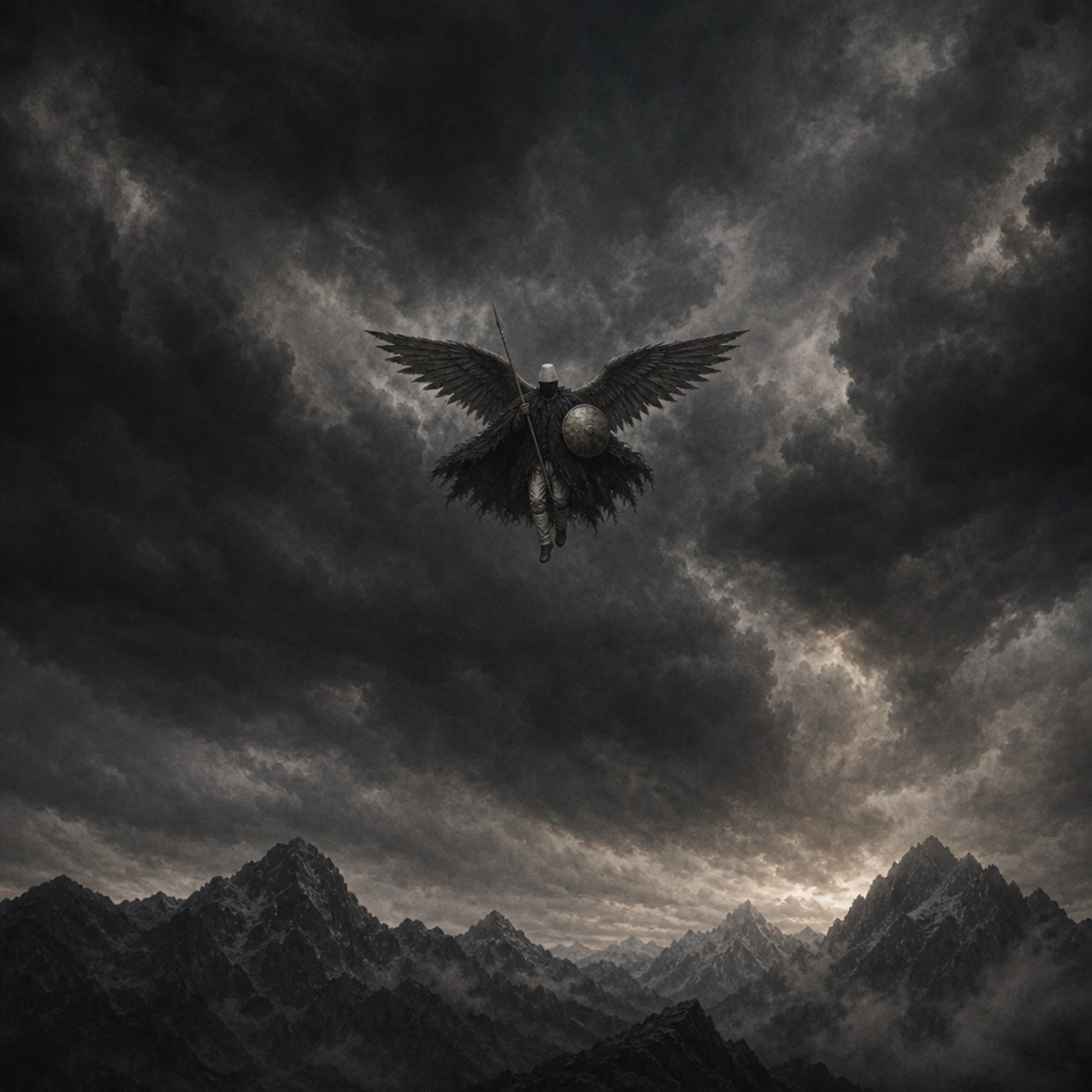
Semi-human winged storm culture-hero kind of Albanian folk belief — archetype of light/order against kulshedra (darkness/chaos).
Story paths
Description
Signs
Belief-signs this figure carries.
Features
- caul-birth destiny (“shirt/chemise”); underarm wings (two or four)
- extraordinary bodily strength (tear trees; hurl boulders, houses, millstones)
- lightning / thunderbolt / meteoric-stone weapons
- cradle-as-shield; plow-beam and share; threshing-floor post / pitchfork arsenal
- thunderstorm as ongoing or decisive combat with kulshedra
- live unnoticed among humans; infant djepësor cradle-muster at lightning
- invulnerability tied to unique birth-conjunction (regional death rules)
- golden heart with central jewel if body opened
- animal forms: black ram (horns), black rooster (eyes); billy goat never
Lead story
Aliases
drangùe · dragùa · dragói · drangoni · drangue · djepësor · djepesor · Dragua · drangoni (Durham)
Region
Strongest Malësia, Mirdita, Kosovo (named local drangues); northern highland belt; SE Pogradec/Korçë winged-horse variant; Bardhi 1635 already pairs dragùa with kulshedra
Relations
- Baloz (epic sea-risen foe)near
- Bollanear
- The Sunlight and dark
- Earthly Beauty / Beauty of the Earthpath ally
- Enji (Thursday / fire name)scholarly link
- The Moonlight and dark
- Mujistrength likeness only
- Oraallies with
- Saint George (spring calendar saint)linked in story
- Zana (mountain nymph)allies with
- Songs of the Frontier Warriorsmetaphor link only from muji
- Kulshedrafights
- Ljubi (garden storm-demon)southern drought field
- Perëndi (living God-word — essay)linked in story
- Saint Elias (thunder / rain saint absorber)storm parallel
- Shurdh (northern storm / hail cluster)storm duel kin
- Stihi (storm–treasure demoness)storm map (no duel)
- The Twins (Zjermi and Handa)blood-oath variant
- Zojz (sky / lightning name)storm duel kin
Linked stories
Caul-born winged highlanders fight the storm-demon with cradle-shields, plow-beams, millstones, lightning; Durham/Elsie thunder-as-battle; N sun/moon seizure apotropaia.
- Storm duel on Debar–Sharr ridgesRecorded
Drangue born to fight kulshedra in thunder weather — highland grammar shared into Dibër/Debar Albanian mountains. Regional color, not a new dragon id.
Red-fish twin birth; ora deathbed + life-token rings; almond fork; Handa enters garden of zanas (Schirò); witch petrifies; lily dew / dragon-tongue cure; e Bukura e Dheut cave; kulshedra city-plague; Barkulku; sword of chastity. Wheeler: Zef/drangue + Mamadreqja; omits zanas/bed.
A shuttered city: kulshedra seals the river source and eats a maiden a day. Princess Bardhakuqja tied at the abyss; Zjermi (+ Wheeler drangues) slays seven-headed beast; Barkulku impostor exposed.
On Wheeler’s road Zjermi finds wounded drangue Zef; they mingle blood. Dogs unafraid of the storm-brother.
Lahuta canto 16: named local drangue path — kulshedra from Shalë cave seeks revenge; ora feast after victory.
Caul-born drangue fight kulshedra with lightning, plow-beams, millstones, cradles-as-shields. Rugova tellings: power fails if anyone but the mother knows the child’s nature. Named local drangues recorded in Kosovo highland belt.
- SE drangue winged-horse vs kuçedraReconstructed
Caul-born storm hero class fights kulshedra. SE Pogradec/Korçë winged-horse physiology = medium_regional variant — not national default art. Toskëria SE belt adjacency.
- Shurdh hail traveler — Alps clusterReconstructed
Storm figure rides hail clouds; turned by metal, noise, gunshots, outdoor brands (zjarr grammar). Absorbs I Verbti (Zadrima fire–wind) and Rmoria (Shala) as dialect map. Soft edges Zojz/Perëndi/Enji/Ilia/Drangue — no identity merge. Not pan-Albanian Zeus.