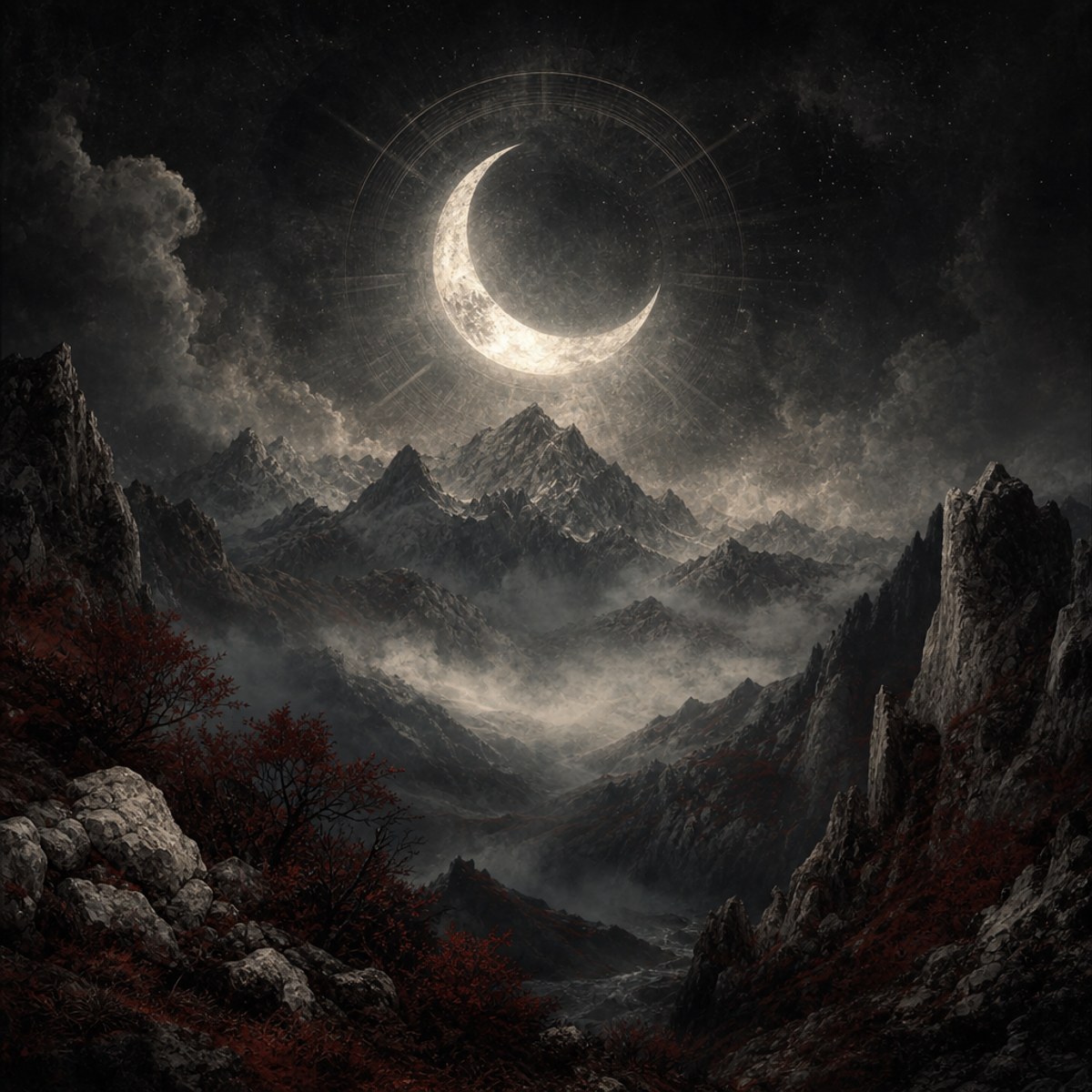
The Moon
Hëna
Hënë; Gheg Hana / Hanë) is the animistically personified female Moon of Albanian pagan belief — the celestial counterpart of Dielli (the Sun).
Description
Motifs
- crescent
- rayed crescent twigs of light
- sun moon pair
- female personified moon
- lunar phases agriculture
- lunar phases body craft marriage
- fertility increase sterility decrease
- oath me hene
Lead story
Aliases
Hënë · Hana · Hanë · e hënë · Moon (Albanian paganism) · Hana/Hanë (Bogdani = Diana rendering)
Region
Pan-Albanian lunar custom and oath; densest material record in northern highland tattoos, grave carvings, jewellery, embroidery, house carvings; Gruda / northern Catholic women’s headgear with sun-star + crescent moon at crown
Relations
- The Earth / Lady of the Earthwaxing moon building window context
- The Sunsky pair
- Dranguelight and dark
- Enji (Thursday / fire name)light fire cluster
- Perëndi (living God-word — essay)linked in story
- Prende (dawn / love / Friday)not the same as
- Saint George (spring calendar saint)linked in story
- Zana (mountain nymph)scholarly link
- Zojz (sky / lightning name)linked in story
- Kulshedrathreatens
- The Twins (Zjermi and Handa)forehead mark
- Vitore (Household Serpent)linked in story
- Daughter of the Moon and the Sunmoon parent field
Linked stories
Weekday e premte / e prende; Afërdita morning/evening star; northern Zoja Prenne / Zoja e Bukuris. 26 July: finest clothes, mortar and pestle; rainbow as Lady’s belt. Daughter-of-Zojz = folk + IE dawn pattern, not Olympian genealogy.
A deposed king divides a speaking red fish; twin boys Zjermi (sun brow) and Handa (moon brow) are born with twin foals, pups, and silver swords.
- Prende / Friday — dawn women’s cult (Kosova soft)Reconstructed
Dawn/Friday goddess with northern women’s feast grammar and ShënePremte saint box. Kosova participates via Gheg weekday speech; Not the same as H. ëna.
- Sun–moon material religion + oath spineReconstructed
Highland tattoos/graves/carvings: sun-disk / ray-twigs + crescents (Durham; Shala Galaty). Oaths: për atë diell / sy diell; me hënë; për qiell e dhé. Dielli calendar fires (Buzmi, Verëza) strengthen sun via zjarr grammar. Cult carved grammar, not Olympian biography.
- Dielli–Hëna kinship variantsReconstructed
Tirta: sun and moon as husband/wife OR brother/sister — one village keeps one telling. Not both as consorts in the sibling frame. Forehead marks on twins/heroes are related only.
- Verëza / Buzmi calendar fires strengthen DielliReconstructed
Winter solstice Nata e Buzmit and spring Dita e Verës / Verëza kindle fires especially before sunrise so the Sun takes strength. Enji/zjarr is the fire center; Dielli is the solar spine.
- Arbëresh weekday sacral residueReconstructed
Arbëresh keeps e enjte / e premte / e diel / e hënë forms as calendar fossils. Densify as lexicon edges to enji/prende/dielli/hena — not new Italian Olympians. Creature loans (karkanxholi etc.) stay B/region swarm.