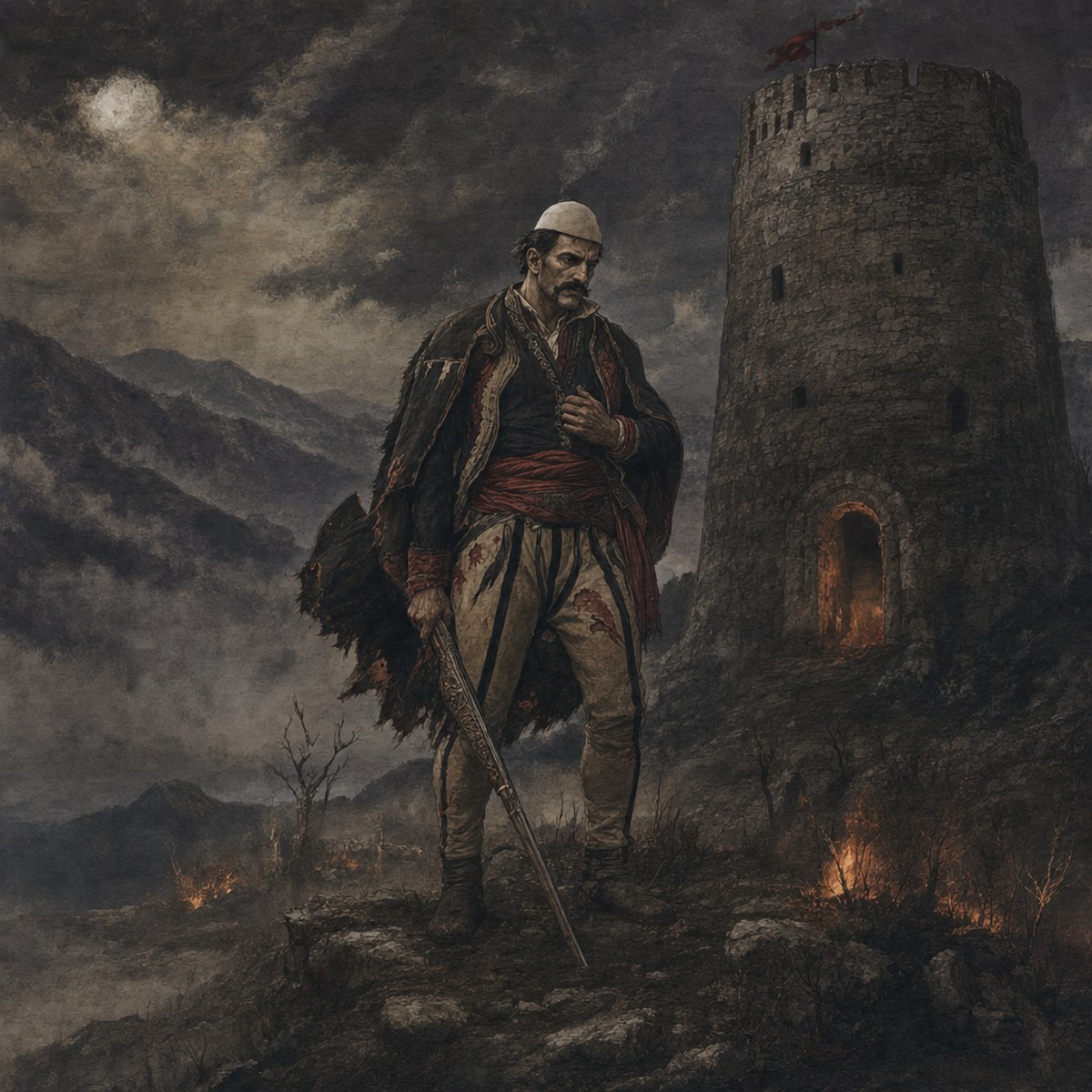
Gjergj Elez Alia

Gjergj Elez Alia

Legendary frontier hero of a self-standing Albanian epic subcycle inside / beside the Kângë Kreshnikësh, not of the Muji–Halili band.

Description

Legendary frontier hero of a self-standing Albanian epic subcycle inside / beside the Kângë Kreshnikësh, not of the Muji–Halili band. In the Nikaj song recorded by Bernardin Palaj and Donat Kurti (1937) and translated by Elsie & Mathie-Heck (2004:91–102), he lies nine years with nine wounds, tended only by his sister, until a sea-risen Baloz (alias Bajloz; Balozi i Zi) demands maidens, livestock, and kreshnik tribute. He rises, duels, beheads the monster, then dies with his sister in a shared embrace and grave. Albanian variants stress archaic family-ballad texture and sea-monster threat over Ottoman religious framing; Slavic/Bosniak cycles share the name but diverge in plot and theology.

Motifs

  • nine wounds nine years
  • sister as sole nurse
  • tears mistaken for rain
  • baloz sea tribute
  • maiden livestock kreshnik levy
  • corrupt farrier honor test
  • mejdan insult exchange
  • risen from the grave taunt

Lead story

Nine years. Nine wounds. In the kulla everyone else forgot him; only his sister stayed — washing the wounds with spring water and tears, wiping blood with her hair, binding them in their mother’s shawl under their father’s old clothes, weapons hanging idle at the bed-foot. Rumour ran of a swarthy Baloz (Bajloz) risen from the ocean: each house a roast of mutton, each house a maiden, a kreshnik slaughtered by day, a region ravaged by week. When the demand reached their tower, her tears fell on his face. He cursed the leaking roof; she told him it was not rain. She would rather be buried than given to the Baloz. He ordered the warhorse shod. The false farrier asked for her favours; she cursed him and found an honest blacksmith. At dawn on the mejdan the Baloz mocked a man risen from the grave. Gjergj answered: nine years on death’s door — you woke me by claiming my sister without battle. Forefathers’ law: nothing without arms. Cudgels first — the Baloz’s blow dropped the courser and flew twenty-four yards; Gjergj’s return felled the monster. Sabre cut the head; he dragged the torso to the water until the river ran black three years. Back at the kulla he bequeathed tower, cattle, and sister’s care to his companions, then threw his arms around her neck. Both hearts stopped. Friends dug one wide grave, arms still round each other, linden at the headstone. In spring a cuckoo found the twigs withered and the rooftop fallen, and told the mountain wanderer: nowhere could I find him — Gjergj Elez Alia.

Aliases

Gjergj Elez Alija · Gjergj Elez Ali · Đerzelez Alija · Djerdjelez Alija · Đerđelez Alija · Gürz Ilyas · Gerz-Iljas · Hysen Aga · Hysen Kreshniku · Deli Bajraktari

Region

Northern Albanian highlands — Nikaj (Tropojë / Highlands of Gjakova) as flagship Palaj–Kurti text; Kosovo and N. Macedonia name-variants; Bosniak Krajina parallel tradition (Đerzelez)

Relations

Linked stories

  • Ali bands with Muji’s company and names Baloz as foe in song.

  • Word goes out that a black baloz has come from the sea; haraç of maidens and livestock; mejdan; beheading; black blood stains water. Adriatic Ulqin–Malësia performance formula — sea-ogre foe, not Sea Beauty and not lugat.

  • Dying brother rises for one duel vs sea-risen Baloz who claimed his sister; shared grave. Adjacent subcycle, not Muji twin war.