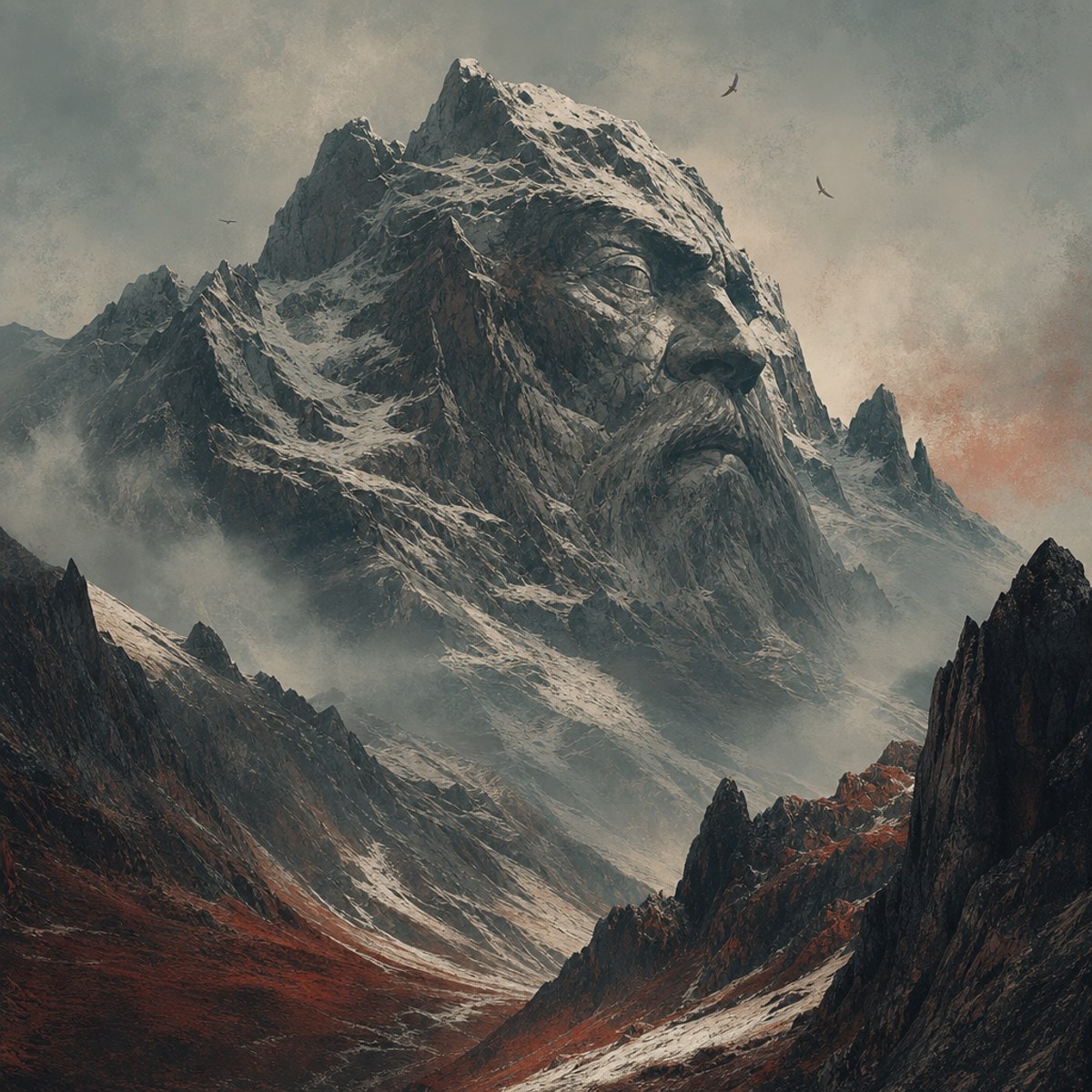
Father Tomorr
Baba Tomor
Mountain-father giant chapter: eagles, Wind, Beauties, Shpirag duel, Osum tears.
Story paths
Description
Signs
Belief-signs this figure carries.
Motifs
- sacred mountain personification
- white beard giant
- female eagles guardians
- winds as servants
- east wind bride transport
- e bukura e dheut consort
- berat guarded city
- shpirag rival mountain
Lead story
Aliases
Baba Tomorr · Father Tomor · Father Tomorr · Tomor · Tomorr · Mali i Tomorrit
Region
Central/southern Albania — Mount Tomorr (Berat–Skrapar; peak Çuka e Partizanit ~2416 m); valley of the Osum opposite Mount Shpirag; Berat as guarded city in legend; mule-hoof trace near Sinja (Berat region).
Relations
- The Earth / Lady of the Earthearth-near
- Kulshedralinked in story
- Saint Elias (thunder / rain saint absorber)syncretic overlay
- Zojz (sky / lightning name)sky-father slot
- Shpiragrival mountain
- The Sunsky triad
- Beauty of the Sea / Sea Beautyplace-myth with
- Earthly Beauty / Beauty of the Earthconsort of
- Kukudh (multi-type undead / plague)Tomorr region
- Sari Saltik (Krujë / Pashtrik mountain sacral)sacred mountain
- Vitore (Household Serpent)linked in story
Linked stories
- Tomor vs ShpiragRecorded
While Baba Tomor drowses with Earthly Beauty, rival Shpirag advances on Berat; sisters' tears become the Osum. Landscape duel on Tomorr — not later pilgrimage overlays and not cult-earth oath sheet.
- Sea Beauty holds the dayRecorded
Earthly Beauty spends daylight with E Bukura e Detit; evening Wind returns her to Tomor. Coastal/sea being for the map — Tomor place-myth host, not an Ulqin-only mermaid invention.
- Tomor and the sky-father slotReconstructed
Baba Tomor fills a mountain sky-father role in living legend; Zojz is a separate Zadrima god-name residue. Parallel slots — never a merge into Zeus.
- Zojz Zadrima god-name residueReconstructed
Oath «Pasha Zojzin!»; elders’ cloud-and-thunderbolt image punishing tall pride. Named god-name thin outside Zadrima; pan-Albanian sky rites often nameless;.
Beauty triad (earth/sea/sun) is interpretive scholarship only — never Zeus/Poseidon/Hades folk temple fact.
One sacred mass, separate chapters: Baba Tomor giant with eagles, Wind, Earthly Beauty, Shpirag, and Osum tears; Elias/Mary overlays. Not a Zeus temple — keep the chapters distinct.
- Beauty triad — interpretive box onlyEditorial
Scholarly Fishta–Lambertz heaven–sea–underworld analogy (Earth / Sea / Sky Beauty) is a footnote — NEVER a Zeus/Poseidon/Hades folk temple or three-sibling family of gods novel. i Bukuri i Qiellit → Dielli/Zojz epithet, not C biography.