Description
Motifs
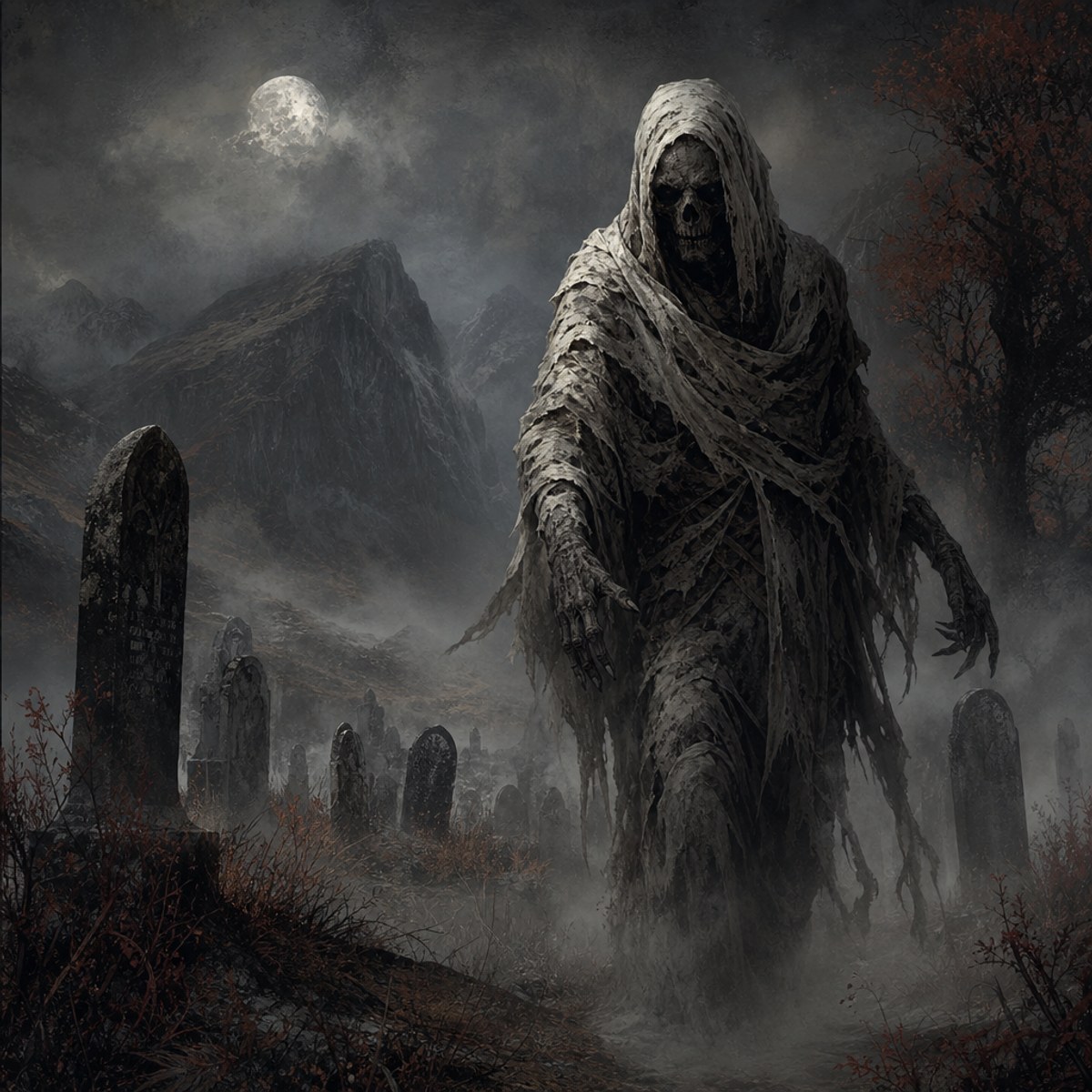
- wicked dead rises nightly
- saturday grave rest
- dead mans skin shroud
- long nails
- yellow flame appearance
- shadow lairs wells ruins caves
- flies rides winds
- assaults sleepers lures children
Lead story
Aliases
liogat · llugat · vampir · yellow-flame lugat
Region
Pan-Albanian (Muslim and Christian layers); Tomorr regional for unburned → kukudh escalation
Relations
- Abe (cloak phantom)not the same as
- Aga Ymer (Ulcinj besa-return)not the same as
- Avullushe (vapor smotherers)not the same as
- Baloz (epic sea-risen foe)not the same as
- The Earth / Lady of the Earthburial custom rejects revenant
- Flama (disease ghost)restless dead adjacent not vampire peer
- Karkanxholi (January iron-shirt undead)not the same as
- Kostandini and Doruntinarelated motif
- Dhampir (living vampire-hunter)parent of
- Kukudh (multi-type undead / plague)regional escalation only
- Mother of the Hearthlinked in story
- Shtriga (vampiric witch)related, distinct
- Hija (shade / soul-shadow)not the pest-revenant
- Jud (giant-ghost)not the same as
Linked stories
- Blood in the animal’s earRecorded
Living son of a lugat keeps night watch at the cattle byre, sees the invisible pest, fires; proof falls as blood in the ear. He eats ordinary food.
- January iron-shirt with kukudhRecorded
Twelve nights; squat iron-shirt figure with chains and pale breath on Arbëresh lanes; January pair with kukudh chain-corpse — calendar stub, not lugat-equal kind.
- Tomorr: leave him unburnedRecorded
Near Tomorr, folk say an unburned lugat thickens into the heavier kukudh name. Regional escalation only — not a national 30-day/40-year clock, not Kosova default.
- Shtriga, Flama, and AvullusheRecorded
Shtriga drinks infant blood; Flama personifies disease; Avullushe smother with vapor. Keep them in the blood–nightmare cluster, not as one kind.
Poloska’s Macedonian/Albanian dialect strige/striga is the blood-witch under another spelling. Cradle, moth, spit-cure stay on shtriga; add NMK regional note only.
- Halil Garria (N besa ballad)Recorded
Northern/Kosovo brother–sister dead-ride type of Kostandini–Doruntina (Halil Garria). Oath terror, not blood appetite; never a kreshnik Halili and never Domain-B lugat kind page.
Elsie Hija: independent soul-shadow with roadside stones and dog-bark omen; Tomor crown nightmare face. Lugat owns the pest-revenant corpse. Never merge.
- Jud and the LugatRecorded
Jud: beast-shifter giant-ghost and xhudhi race memory. Lugat keeps the grave revenant.
- Abe the cloak phantomReconstructed
Abe is a woman’s shape in a coarse aba cloak—Elsie’s thin phantom stub.
- Lugat spine — Ulqin belt & NMK Albanian villagesReconstructed
Same pest-revenant across Montenegro Albanian and N. Macedonia Albanian belts. Names shift (lugat, vampir, vurkollak); Meshkov affirms same complex. Struga boiling-water destruction = soft regional note only.
- Earth rejects the criminal deadEditorial
Oath-earth and burial custom reject the criminal dead who return as lugat — etiology adjacency, not identity of cult-earth with the revenant.
In Tomorr-area lore, lugat may escalate toward kukudh; dhampir hunter lore sits nearby as a related — related restless-dead cluster, not a pan-Albanian blood-vampire identity merge with Constantine.