Rozafa

Rozafa

Place-myth for Rozafa / Rozafat Castle (Shkodër): two separate layers must not be collapsed.

Story paths

Description

Place-myth for Rozafa / Rozafat Castle (Shkodër): two separate layers must not be collapsed. (1) Naming legend (Barleti 1504, De obsidione Scodrensi): from “old writings… more fragments than real annals,” siblings Rosa and Fa founded the fortress, hence Rosafa — etymology / naming only. (2) Immurement ballad: the bride walled so the fortress will stand; milk and besa kinship stay related, not co-plot with Barleti’s naming scrap.

Signs

Belief-signs this figure carries.

Motifs

  • collapsing-walls
  • foundation-immurement
  • living-sacrifice
  • besa-kept-and-broken
  • youngest-brother-honor
  • wife-brings-lunch
  • four-openings-eye-hand-foot-breast
  • nursing-mother

Lead story

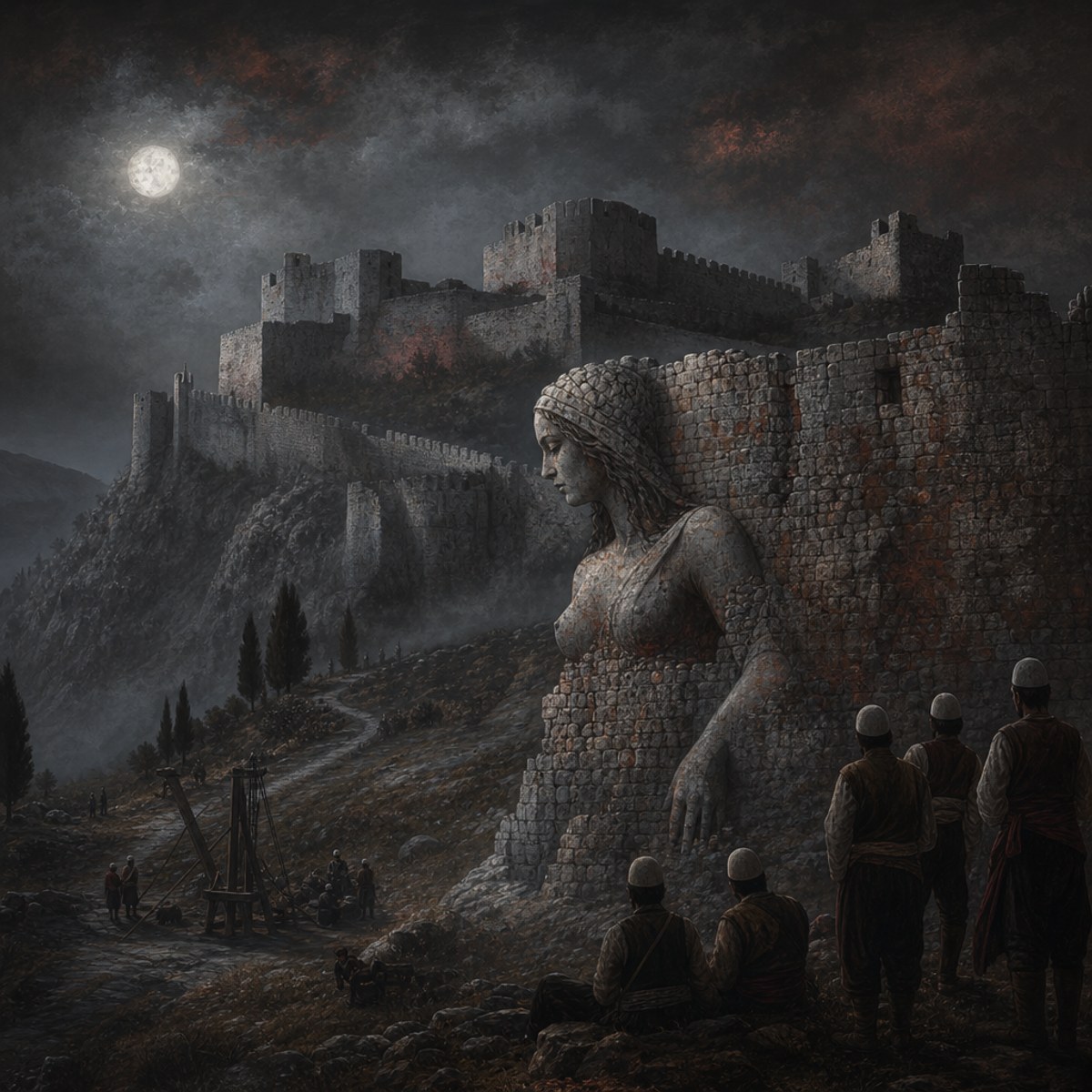
Source note: This retelling follows the Albanian immurement ballad (Mitko 1878 → Palaj–Kurti 1937 → Kuteli/Elsie). It is not Barleti’s 1504 text. Barleti records only a Rosa–Fa naming legend for the fortress; the three-brothers living-immurement plot attaches later. In many collected songs the wife has no personal name; “Rozafa” here is the modern place-myth label. Fog lay three days over the Buna. When the wind tore it open, Mount Valdanuz stood clear, and on that height three brothers raised a castle. By day their walls climbed; by night the stones fell back into rubble. An old man greeted their labor. The eldest brother broke his word and warned his bride. The second did the same. The youngest kept besa and said nothing. At dawn the axes rang. Their mother, knowing nothing of the pact, asked the eldest daughter-in-law to carry bread, water, and wine. She pleaded illness. The second begged leave to visit her parents. Then the mother turned to the youngest wife. The young woman kissed her nursing son on both cheeks, left him in the others’ keeping, and climbed with the midday meal. When her husband saw her, he cast his axe into the valley. His brothers named the oath. She did not flee. “Then may it be so,” she answered. “Only a place for my right eye, my right hand, my right foot, and my right breast—so — that when my child cries I may cheer him with my eye, comfort him with my hand, rock him with my foot, and nurse him with my breast. Let my breast turn to stone and may the castle flourish. May my son become a great hero.” They built the wall around her as she asked. That night the stones did not fall. They rose, and kept rising. Tradition holds that at the foot of the castle the limestone still weeps a pale dampness—some say a mother’s tears, some say milk—so that those who pass the niche remember the woman who kept faith with her child when the brothers’ besa chose her for the wall.

Aliases

Rozafat · Rosafa · Rosapha · Kalaja e Rozafës · Kalaja e Rozafatit · Kështjella e Rozafës · Legjenda e Rozafës · Legjenda e Kalasë së Rozafatit · immured woman of Shkodra · Legend of Rozafat Castle

Region

North_albania,pan_albanian

Relations

Linked stories

  • Bride Rozafa is walled into Shkodër's castle so the wall will stand. Barleti Rosa–Fa is naming-only — never the immurement source. Keep earth-milk and besa kinship as separate related, not co-plot.

  • Immurement + milk niche at Shkodër sit the same lake world as Kraja/Tuzi. Map adjacency for Montenegro Albanian edge — Barleti = naming only.

  • Immurement and the Constantine besa complex share sacrifice/oath gravity as motif cousins — never one plot, never Barleti naming as immurement proof.

  • Immurement and the Doruntine besa ballad are kin in oath/death grammar — parallel related, not one merged legend.